Introduction
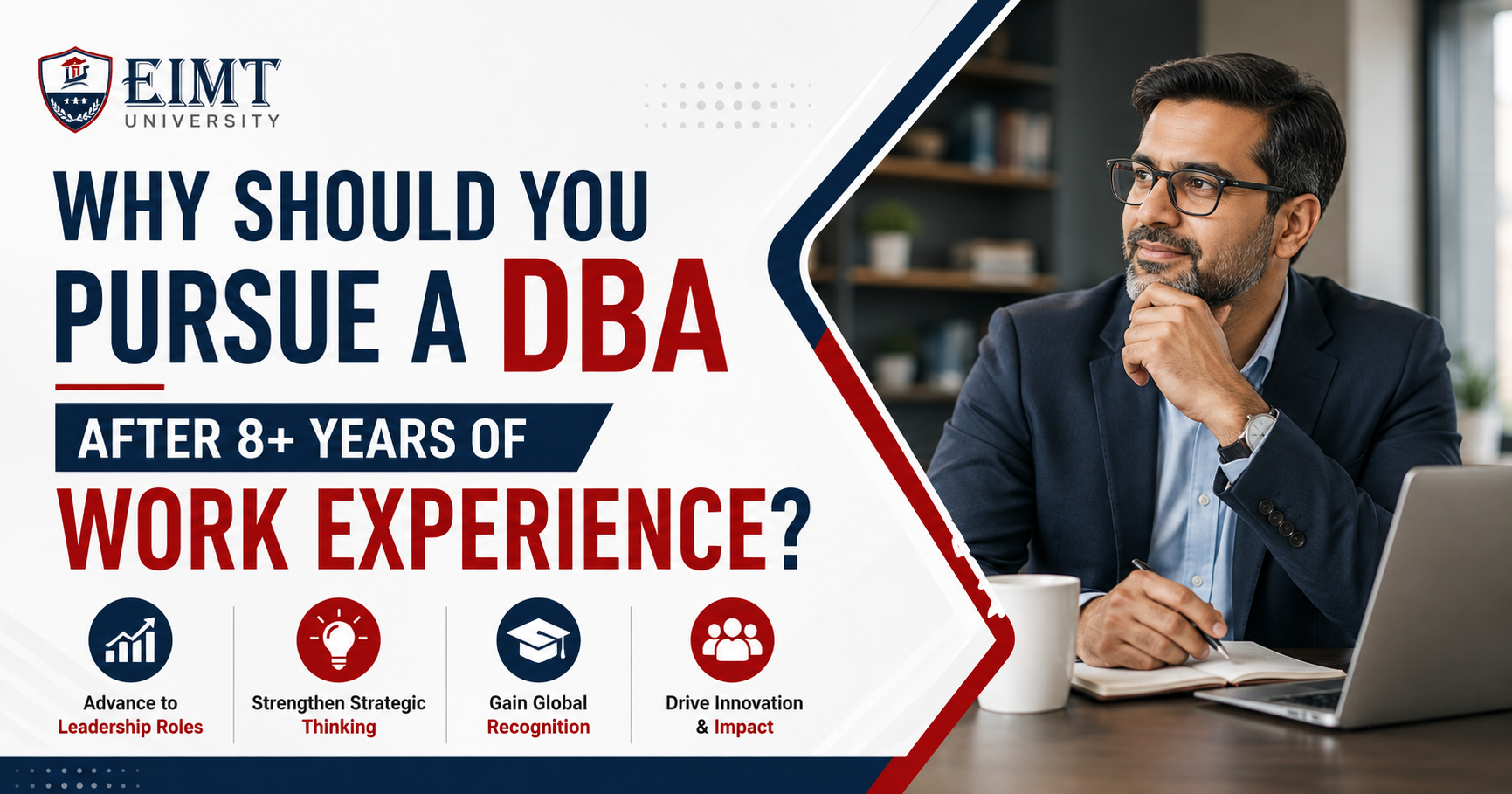
After spending 8 or more years in your career, many professionals reach a point where technical expertise alone is no longer enough for career growth. Promotions become more competitive, leadership responsibilities increase, and organizations expect strategic thinking rather than just operational excellence.
This is where a Doctor of Business Administration (DBA) can make a significant difference. Unlike an MBA, which focuses on building management knowledge, a DBA is designed for experienced professionals who want to strengthen leadership skills, solve complex business challenges through research, and prepare for executive-level roles.
If you already have 8+ years of professional experience, a DBA can help you take the next step in your career.
Why 8+ Years of Experience Is the Right Time for a DBA
Professionals with several years of industry experience can relate classroom learning to real business situations. This makes a DBA much more valuable than pursuing it early in a career.
Better Understanding of Business Challenges
After years of working in an organization, you have likely faced issues related to leadership, operations, customer management, finance, or strategy. A DBA helps you analyze these challenges using advanced business frameworks and research.
Practical Application of Learning
Instead of learning concepts only for examinations, you can immediately apply new knowledge to your workplace, improving business processes and decision-making.
Career Benefits of a DBA After 8+ Years
A DBA can support your long-term professional growth in several ways.
Move into Senior Leadership Roles
Organizations often look for leaders who can think strategically and guide business transformation. A DBA strengthens your profile for roles such as:
- Director
- General Manager
- Vice President
- Chief Operating Officer
- Chief Executive Officer
- Business Head
Improve Strategic Decision-Making
As you move into leadership positions, your responsibilities shift from managing daily operations to making decisions that affect the entire organization.
A DBA develops skills in:
- Strategic planning
- Business analysis
- Organizational leadership
- Risk management
- Innovation management
Increase Professional Credibility
Holding a doctoral qualification demonstrates your commitment to continuous learning and advanced professional development.
It can enhance your credibility when:
- Leading business teams
- Presenting to senior management
- Consulting for organizations
- Speaking at conferences
- Training corporate professionals
Why a DBA Is Better Than Another MBA
Many professionals already have an MBA before considering further education.
MBA Focus
An MBA develops general business and management skills.
DBA Focus
A DBA builds advanced leadership, research, and strategic management capabilities for experienced professionals.
If you already possess management experience, a DBA offers greater depth than pursuing another master’s degree.
How a DBA Helps Entrepreneurs
Business owners also benefit from doctoral-level business education.
Better Business Strategy
A DBA helps entrepreneurs make informed decisions based on research and market analysis.
Business Growth
The program develops skills in:
- Market expansion
- Competitive strategy
- Organizational development
- Innovation
- Leadership
These capabilities can contribute to long-term business success.
Benefits for Working Professionals
One of the biggest advantages of modern DBA programs is flexibility.
Continue Working While Studying
Many DBA programs are designed for professionals who want to maintain full-time employment.
Flexible Learning
Online and blended learning formats allow students to study according to their schedules.
Immediate Workplace Impact
The knowledge gained during the program can often be applied directly to ongoing business challenges.
Skills You Develop During a DBA
A DBA focuses on developing executive-level competencies.
Leadership Skills
Learn how to manage teams, lead organizations, and drive business growth.
Research Skills
Develop the ability to analyze business problems and create evidence-based solutions.
Strategic Thinking
Understand how to make long-term business decisions in competitive environments.
Problem-Solving
Learn structured approaches to solving organizational challenges.
Communication Skills
Improve your ability to present ideas, write research reports, and influence stakeholders.
Who Should Consider a DBA?
A DBA is particularly suitable for professionals such as:
Senior Managers
Professionals preparing for executive leadership positions.
Business Consultants
Individuals advising organizations on strategy and business transformation.
Entrepreneurs
Business owners seeking sustainable growth strategies.
Corporate Executives
Professionals responsible for strategic planning and organizational development.
Functional Heads
Experienced professionals leading departments such as HR, Finance, Marketing, Operations, or IT.
Is a DBA Worth It After 8+ Years of Experience?
For many professionals, the answer is yes, especially if your career goals include executive leadership, consulting, entrepreneurship, or organizational strategy.
A DBA is not simply another academic qualification. It is an opportunity to:
- Strengthen leadership capabilities
- Develop advanced strategic thinking
- Improve research and analytical skills
- Enhance professional credibility
- Prepare for senior management responsibilities
The value of the degree depends on how well it aligns with your long-term career goals and the effort you invest in applying what you learn.
Conclusion
If you have 8 or more years of professional experience, a DBA can be an excellent next step in your career. At this stage, you already understand business operations, industry challenges, and leadership responsibilities. A DBA helps you build on that experience by developing advanced research, strategic thinking, and executive leadership skills.
Before choosing a program, compare universities, curriculum, learning format, duration, fees, and recognition. Select a DBA that supports your long-term career objectives and fits your professional aspirations.
Frequently Asked Questions
Is 8 years of work experience enough for a DBA?
Yes. Most DBA programs are designed for experienced professionals, and 8+ years of work experience provides a strong foundation for doctoral-level learning.
Can I pursue a DBA while working full-time?
Yes. Many DBA programs offer online or blended learning formats that allow professionals to continue working while studying.
Is a DBA better than another MBA after 8 years of experience?
For experienced professionals, a DBA often provides more advanced leadership and research skills than pursuing a second MBA.
Will a DBA help me move into leadership roles?
A DBA can strengthen your profile for senior management, executive leadership, consulting, and strategic decision-making roles.
Who benefits the most from a DBA?
Senior managers, entrepreneurs, consultants, corporate executives, and professionals with significant work experience who want to advance into leadership positions.